
BeeHunt Quality Assurance
Quality Without Compromise
In an industry plagued by adulteration — an EU report found 46% of imported honey samples were adulterated — BeeHunt's quality system is your guarantee of authenticity.
BeeHunt was built to be the antidote to the global honey trust crisis.
46%
of imported honey samples found adulterated (EU 'From the Hives' Report)
Our Six-Stage Quality System
Every batch of BeeHunt honey passes through six documented quality checkpoints before it reaches your warehouse. Here is how we guarantee what we promise.
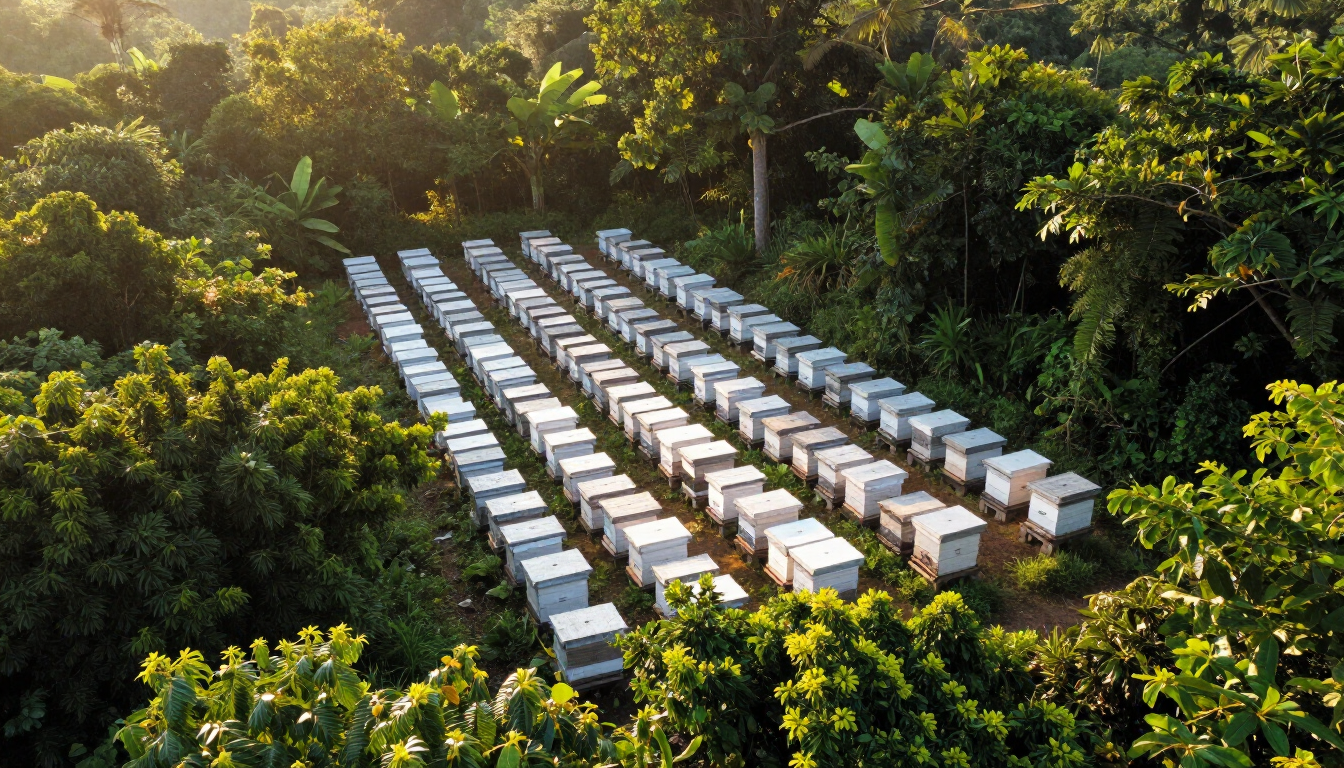
01 — Apiary Management
02 — Raw Honey Reception Testing
03 — Low-Temperature Processing
04 — In-House Lab Testing
05 — Third-Party Verification
06 — Pre-Shipment Certificate of Analysis
This six-stage system is not an audit exercise — it is our operating standard. Every batch, every time.
Certifications & Standards
BeeHunt holds or is actively pursuing the certifications required by the world's most demanding import markets. Below is our current certification status.
HACCP
Hazard Analysis and Critical Control Points. The internationally recognized framework for systematically identifying and preventing food safety hazards in processing.
Certified ✓
ISO 22000
Food Safety Management System. Integrates HACCP with prerequisite programmes and management system requirements, meeting the expectations of global food manufacturers and retailers.
Certified ✓
BRC Global Standard
British Retail Consortium Global Standard for Food Safety. Required by major EU and UK retailers as a condition of supply.
In Progress
True Source Honey
Independent certification that verifies the geographic origin authenticity of honey and confirms it has not been laundered through a third country. Critical for US market compliance.
Certified ✓
EU Organic
European Union organic certification for honey sourced from remote mountain apiaries free of agricultural chemical exposure.
In Progress
USDA Organic
United States Department of Agriculture organic standard. Enables positioning in the premium US organic retail and health channel.
Planned Year 2
Halal
Certification for Muslim-majority markets across the Middle East, Southeast Asia, and North Africa.
Planned
Kosher
Certification for Jewish dietary law compliance, enabling distribution through kosher retail and foodservice channels.
Planned
Certification documents are available on request. Contact our quality team for the latest audit reports.
Testing Capabilities
BeeHunt tests at two levels: an in-house physicochemical panel on every single batch, and independent third-party verification for export compliance and advanced authenticity screening.
In-House Laboratory — Every Batch
- Moisture content
- HMF (Hydroxymethylfurfural)
- Diastase activity
- Electrical conductivity
- pH
- Colour (Pfund scale)
- Sugar profile (fructose, glucose, sucrose ratios)
- Sensory evaluation (aroma, taste, texture, appearance)
Third-Party Labs: SGS · Intertek · QSI
- NMR honey fingerprinting (geographic origin authentication)
- IRMS C4 sugar analysis (adulteration detection via isotope ratio)
- Pesticide multi-residue screening (300+ compounds)
- Antibiotic residue screening
- Heavy metals analysis (Pb, Cd, Hg, As)
- Pollen analysis (botanical origin verification)
Third-party test reports are available to verified buyers upon request.
From Hive to Harbor — Complete Traceability
Every batch of BeeHunt honey carries a complete, documented traceability record. From the GPS-tagged apiary where bees forage to the container that loads onto your freight forwarder's truck — we can account for every step.

01 — GPS-Tagged Apiary
02 — Beekeeper Identity
03 — Harvest Date & Floral Source
04 — Batch Lab Results
05 — Processing Batch Reference
06 — Shipment Tracking
Coming soon: scan-to-verify QR codes on every BeeHunt shipment — giving your team instant, mobile-accessible batch traceability.
Compliance by Market
BeeHunt is built to meet the requirements of the world's most demanding import markets. Use the table below to confirm our compliance readiness for your target destination.
Market | Regulatory Framework | Standards Met | Antibiotic/Pesticide Limits | Tariff Status
EU — Honey Directive 2001/110/EC | HACCP, ISO 22000, BRC, True Source | EU MRLs (Reg 396/2005), TRACES import system compliant | EVFTA: 0% preferential tariff for qualifying shipments
Japan — Food Sanitation Act; JAS standards | ISO 22000, third-party antibiotic screening via SGS | Positive List System compliant (strictest antibiotic limits globally); JAS labeling ready | CPTPP: reduced tariff schedule
USA — FDA FSMA; US Honey Regulations | True Source certified; FDA FSMA compliant | No anti-dumping tariff (unlike Chinese honey); pesticide screening via Intertek | Standard MFN tariff; no ADD/CVD
Australia & NZ — FSANZ Food Standards Code | FSANZ-compliant labeling; CoA provided per shipment | Pesticide MRLs compliant; moisture and HMF within FSANZ limits | RCEP: preferential tariff access
Middle East — GCC Food Safety Standards; individual country import rules | Halal certification in progress; CoA and phytosanitary certificate per shipment | Antibiotic and pesticide screening compliant | Standard import tariffs; Halal certification will unlock key channels
Requirements change. Our regulatory team monitors import market updates continuously and proactively communicates changes that affect your supply agreement.
Due Diligence Questions, Answered
These are the questions our procurement contacts ask most often. If yours is not here, contact our quality team directly.
How do you prevent honey adulteration in your supply chain?
Adulteration enters most honey supply chains at the sourcing stage. BeeHunt addresses this at origin: every partner apiary is GPS-registered and audited, every batch is 100% tested at intake and rejected if non-conforming, and we use NMR fingerprinting and IRMS C4 sugar analysis via independent labs to authenticate geographic and botanical origin before export. We do not buy from brokers or spot markets — all supply is from audited, known-origin apiaries.
What documentation accompanies each shipment?
Every BeeHunt shipment includes: a batch-specific Certificate of Analysis (CoA) covering all physicochemical parameters; a phytosanitary certificate from Vietnamese authorities; a Health Certificate for EU-destined shipments; country-of-origin documentation; and, for organic-certified products, a transaction certificate from the certifying body. Third-party lab reports (SGS, Intertek, or QSI) are appended on request or where the destination market requires independent verification.
Can I request third-party test reports before placing an order?
Yes. Verified buyers at the sample evaluation or RFQ stage can request copies of recent third-party test reports for the specific honey variety and origin they are evaluating. Submit a request via our contact form and our quality team will respond within one business day.
How does BeeHunt verify floral source authenticity (e.g., that Coffee Blossom Honey is genuinely from coffee blossoms)?
Floral source authenticity is verified through pollen analysis conducted by independent laboratories. Pollen profiles are matched against botanical reference databases to confirm dominant floral origin. For our signature Vietnamese Coffee Blossom Honey, pollen analysis showing Coffea robusta pollen dominance is included in the standard documentation package.
What are your quality non-conformance procedures? What happens if a shipment does not meet spec on arrival?
BeeHunt provides a pre-shipment Certificate of Analysis for every lot. In the event of a verified quality non-conformance on arrival — confirmed by an independent third-party lab at the buyer's location — BeeHunt will replace the non-conforming lot or provide a credit at our discretion, subject to the terms of the supply agreement. We have maintained a 99% quality compliance rate across active B2B contracts.
Ready to evaluate BeeHunt as your certified honey supply partner?